Welcome to the website of the
Four Points Ramble Association
A walking, writing, and charitable fundraising projectThe Four Points Ramble is a charitable project to support and promote wildlife and heritage
conservation, as well as the relief of suffering resulting from illness
or deprivation. It has been supported by a small Association, which has now closed.
A major means of achieving these objectives has been through the making of grants to selected charities: either grants of money raised by selling books and other items, or grants of books which the charities may sell, keeping the proceeds of all sales. Most of the books describe a ramble round England; there are also some sheet music books.
A major means of achieving these objectives has been through the making of grants to selected charities: either grants of money raised by selling books and other items, or grants of books which the charities may sell, keeping the proceeds of all sales. Most of the books describe a ramble round England; there are also some sheet music books.
About us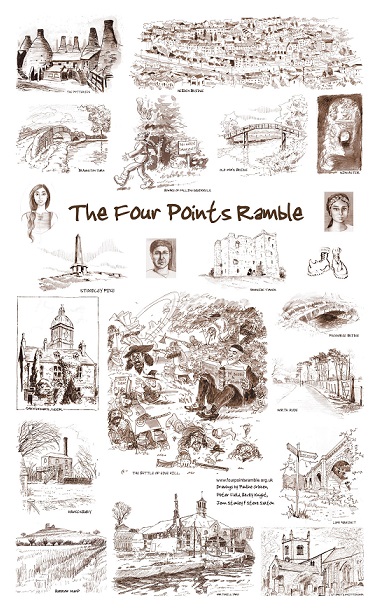
Contact
Address: Four Points Ramble Association, 18 Bullfinch Walk, Manchester M21 7RG
Email: saxton_s@yahoo.co.uk
There is also a Facebook page, which contains a wealth of pictures and further information:
http://www.facebook.com/pages/Four-Points-Ramble-Association/402323480386
The Ramble
Progress Report
The Association was a small group whose main function was to oversee the
financial side of the project, in particular the channelling of books
and funds to the beneficiary charities. It also helped to encourage the
walker & writer to keep going.
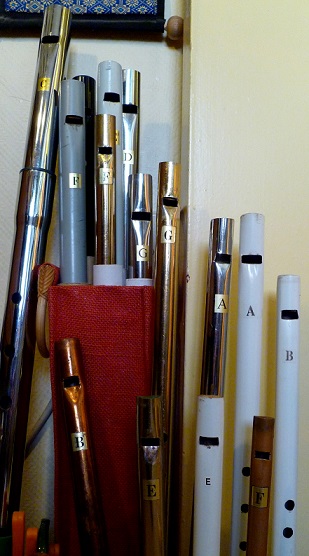
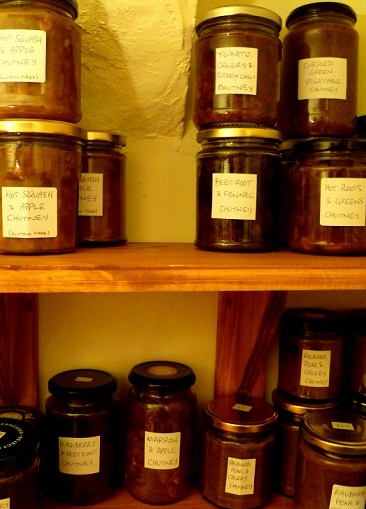
Money has also been raised for charity through sales of home-made chutney, home-made whistles, tunebooks, cafetière cosies, Four Points Ramble teatowels etc, and thereby supported charities at fairs, coffee mornings, bring-and-buy sales and similar events, as well as
giving illustrated talks on aspects of long-distance walking and writing.
Money has also been raised for charity through sales of home-made chutney, home-made whistles, tunebooks, cafetière cosies, Four Points Ramble teatowels etc, and thereby supported charities at fairs, coffee mornings, bring-and-buy sales and similar events, as well as
giving illustrated talks on aspects of long-distance walking and writing.
Contact
Address: Four Points Ramble Association, 18 Bullfinch Walk, Manchester M21 7RG
Email: saxton_s@yahoo.co.uk
There is also a Facebook page, which contains a wealth of pictures and further information:
http://www.facebook.com/pages/Four-Points-Ramble-Association/402323480386
The Four Points
Ramble challenge, first conceived in 2002, is to walk to each of
the four extremities of England (that is, the northernmost,
southernmost, westernmost, and easternmost tips of the mainland), then
return to the starting point. This was not imagined as a
continuous, day-after-day exercise to
be started and finished in one go; that would have transformed a
journey that
should be enjoyed into one to be endured. Neither did it create
any new Trail or Way; if others wish to undertake the challenge, the
suggestion would be to walk the Four Points by whatever route seems
best at the time. There was never any pressure to complete the
project, which was more about slow but hopeful travel rather than
arrival.
Part of the project was to write books which describe the walk but with digressions related to incidents on the walk or with local connections. The digressions reflect interests in wildlife, history, literature, music, biography, industrial archaeology (in particular, canals and railways in the age of steam), genealogy, ecology and biodiversity, politics, heraldry, church history, topography and story-telling. As a sidetrack, three fictional books were written describing imaginary journeys and places (see below).
The principle followed in fundraising for charity was always to raise the costs of travel, materials, printing etc in advance, so that the full price of any product sold for charity went to charity.
Part of the project was to write books which describe the walk but with digressions related to incidents on the walk or with local connections. The digressions reflect interests in wildlife, history, literature, music, biography, industrial archaeology (in particular, canals and railways in the age of steam), genealogy, ecology and biodiversity, politics, heraldry, church history, topography and story-telling. As a sidetrack, three fictional books were written describing imaginary journeys and places (see below).
The principle followed in fundraising for charity was always to raise the costs of travel, materials, printing etc in advance, so that the full price of any product sold for charity went to charity.
Progress Report
Grant making progress Up to December 2025, grants totalling
£16,908.71 were made to over 40 beneficiary charities from central sales, mainly
of books, but
also of other items such as teatowels or home-made
chutney. In
excess
of £1450 was additionally raised for six of those charities
through music concerts given by the Holy Maggots (right) between 2007
and 2015, and in 2010 a further £1000 (including Gift Aid)
was
raised for Macmillan Cancer Support by three Association members doing
a sponsored walk on the Macmillan Way as part of the route of Book 5.
In addition many hundreds of books were supplied direct to
charities who could thereby raise funds themselves.
In recent years, with the increased use of credit cards or online donation, and the disappearance of much spare cash from pockets and wallets, many donations for Four Points Ramble products have been made direct by purchasers to a wide variety of beneficiary charities without money going through our account.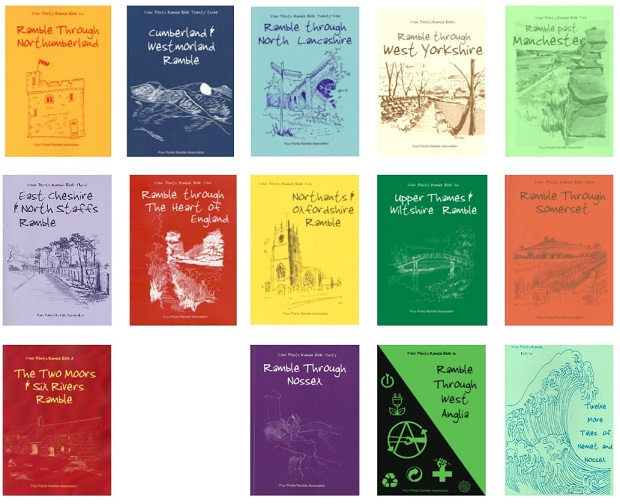
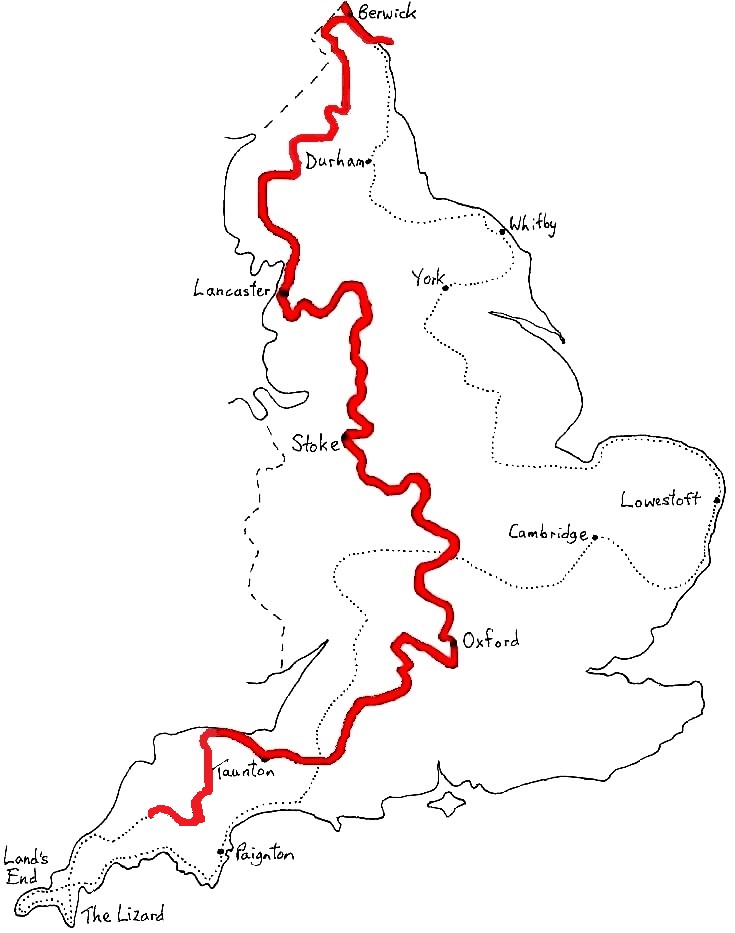
Walking progress. As of December 2025 the furthest point south reached remains Lifton in Devon (as shown by the red line on the map above). This represents 1036 miles on a continuous route from Lindisfarne in Northumberland. Due to the Covid pandemic, onward walking progress was paused and has not resumed.
Writing/publication progress. Eleven walking books were published between May 2007 and December 2019; the three fictional books appeared between 2015 and 2021. More recent are the sheet music books: 'Footed upon the Sod' was published in 2023, and 'The Division Pennywhistle' in 2025. Most of the walking books cost £7.99; Book 30 costs £10, and Books 31 & 32 £5.99. All books are still in stock, although in most cases stocks are quite low. They can be obtained post free by emailing, Facebook messaging, or writing to the Four Points Ramble address above. Books will be sent by post and the purchaser trusted to make an online donation direct to an appropriate charity. This has the added advantage of making it possible for the charity to claim gift aid. Teatowels (£6 but currently out of stock) and tunebooks (£5 for 'Over One Hundred', £15 for 'Footed upon the Sod' and £12 for 'The Division Pennywhistle') can also be obtained in the same way, but we will not trust chutney through the post. Jars of chutney (check for current flavours available) can be delivered in Greater Manchester or nearby.
Writing plans. There are no specific plans at this point, though further walking books, fictional books, or sheet music books are not necessarily ruled out.
In recent years, with the increased use of credit cards or online donation, and the disappearance of much spare cash from pockets and wallets, many donations for Four Points Ramble products have been made direct by purchasers to a wide variety of beneficiary charities without money going through our account.
Walking progress. As of December 2025 the furthest point south reached remains Lifton in Devon (as shown by the red line on the map above). This represents 1036 miles on a continuous route from Lindisfarne in Northumberland. Due to the Covid pandemic, onward walking progress was paused and has not resumed.
Writing/publication progress. Eleven walking books were published between May 2007 and December 2019; the three fictional books appeared between 2015 and 2021. More recent are the sheet music books: 'Footed upon the Sod' was published in 2023, and 'The Division Pennywhistle' in 2025. Most of the walking books cost £7.99; Book 30 costs £10, and Books 31 & 32 £5.99. All books are still in stock, although in most cases stocks are quite low. They can be obtained post free by emailing, Facebook messaging, or writing to the Four Points Ramble address above. Books will be sent by post and the purchaser trusted to make an online donation direct to an appropriate charity. This has the added advantage of making it possible for the charity to claim gift aid. Teatowels (£6 but currently out of stock) and tunebooks (£5 for 'Over One Hundred', £15 for 'Footed upon the Sod' and £12 for 'The Division Pennywhistle') can also be obtained in the same way, but we will not trust chutney through the post. Jars of chutney (check for current flavours available) can be delivered in Greater Manchester or nearby.
Writing plans. There are no specific plans at this point, though further walking books, fictional books, or sheet music books are not necessarily ruled out.
Book One: Ramble Through West Yorkshire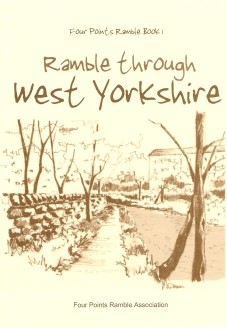
Book One is a diary of the first 54 miles of the walk
(from Gargrave to Hollingworth Lake, via Skipton, Keighley, Haworth,
Hebden Bridge, and Todmorden). It follows the towpaths of the Leeds
& Liverpool Canal and the Rochdale Canal, as well as sections of
the Pennine Way, the Worth Way, the Brontë Way and the Calderdale Way.
Click on the image of the cover to view a sample chapter of the book:
Book Two: Ramble Past Manchester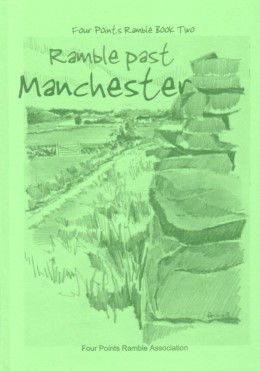
Click on the image of the cover to view a sample chapter of the book:
Book Two covers a 37-mile journey through the Pennine
foothills and valleys east of Manchester, starting at Rakewood, passing
through Delph, Diggle, Uppermill, Mossley, Stalybridge, Woodley, Romiley
and Marple, and finishing at the Bowstones, high above Lyme Park.
Trails and paths followed include the towpaths of the Huddersfield Narrow and Peak
Forest canals, as well as the Rochdale Way, the Oldham Way, the
Crompton Circuit, the Tameside Trail, the Cown Edge Way, the Goyt
& Etheridge Valley Way, the Trans-Pennine Trail, and the beginning
of the Gritstone Trail.
Click on the image of the cover to view a sample chapter of the book:
Book Three: East Cheshire and North Staffs Ramble
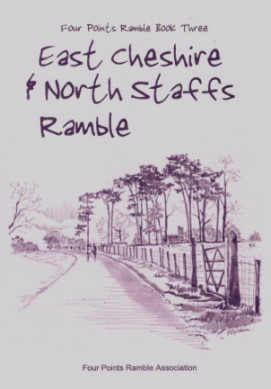
Click on the image of the cover to view a sample chapter of the book:
Book three covers a 60-mile section of the journey south, taking
in the East Cheshire and North Staffordshire hills and valleys,
followed by the urban landscape of the Potteries. It begins above
Lyme Park, near Disley, passes through Macclesfield, Leek, Burslem,
Hanley and Stoke, and ends by the canal in Stone. Trails and
paths followed include the Gritstone Trail, the Staffordshire Way, and
the towpaths of the Macclesfield, Caldon, and Trent & Mersey Canals.
Click on the image of the cover to view a sample chapter of the book:
Book Four: Ramble Through the Heart of England
Click on the image of the cover to view a sample chapter of the book:
Book Four covers a hundred-mile section of the journey
south, starting in Staffordshire and entering four more counties
(Derbyshire, Leicestershire, Warwickshire, and Northants) as the route
swings through the very centre of England. It begins in Stone,
passes through Stafford, Lichfield, Moira, Measham, Stoke Golding,
Bedworth and Rugby, and ends, also canalside, in Braunston,
Northants. Trails and paths followed include the Heart of England Way, and the towpaths of eight different canals.
Click on the image of the cover to view a sample chapter of the book:
Book Five : Northants & Oxfordshire Ramble
Click on the image of the cover to view a sample chapter of the book:
The route covered by this book begins in Braunston, Northants,
and first runs east through Welton and Long Buckby to Great Brington,
before following the Macmillan Way south-westwards for 37 miles via
Farthingstone, Chipping Warden, Claydon, Warmington and Shenington
to Traitor's Ford. It then proceeds south via Hook Norton, Great
Tew, Steeple Aston, Woodstock, Church Hanborough and Eynsham and
finishes in Wolvercote near Oxford.
Click on the image of the cover to view a sample chapter of the book:
Book Six : Upper Thames & Wiltshire Ramble
The route covered by this book begins in Wolvercote near
Oxford, and runs through Oxford City, down the River Thames to
Sandford, then south via Nuneham Courtenay, Clifton Hampden and Long
Wittenham to Didcot; north again via Culham to Abingdon, then west via
Marcham and Kingston Bagpuize to the Thames at Duxford, along the
Thames via Bampton to Buscot; then south via Coxwell to Ashbury, along
the Ridgeway to Chisledon, south via Marlborough to Pewsey; west again
along the Kennet & Avon Canal, then along Wansdyke, to Devizes; then via
Lacock and Melksham to finish at Bradford-on-Avon.
Click on the image of the cover to view a sample chapter of the book:
Book Seven : Ramble Through Somerset
Book Eight : The Two Moors & Six Rivers Ramble
The route covered by this book begins in Culbone in Somerset, and follows a number of long-distance footpaths, including the Samaritans Way South West, the Exe Valley Way, the Two Moors Way, the Dartmoor Way, the West Devon Way, and several others, southwards over Exmoor into Devon, towards and then onto Dartmoor, before turning westwards as far as Lifton, close to the Cornish border. It passes through Exford, Dulverton, Bampton, Tiverton, Crediton, Chagford, Widecombe and Lydford on the way.
Click on the image of the cover to view a sample chapter of the book:
Book Twenty-two: Ramble Through Northumberland
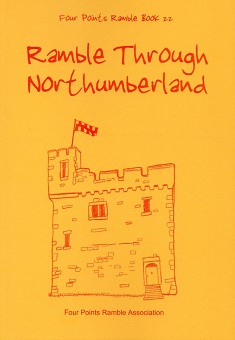
Click on the image of the cover to view a sample chapter of the book:
Book Twenty-three: Cumberland & Westmorland Ramble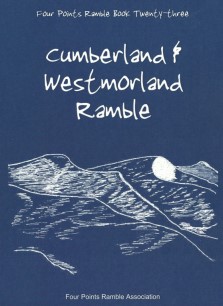
Click on the image of the cover to view a sample chapter of the book:
Book Twenty-four: Ramble Through North Lancashire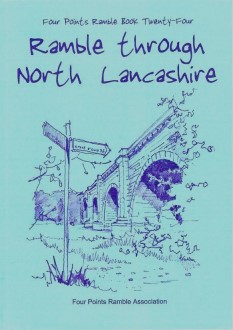
Click on the image of the cover to view a sample chapter of the book:
The Four Points Ramble Association is very grateful to the Co-operative Bank for a grant of £500 towards the printing costs of this book from their Community Directplus Customer Donation Fund.
Book Thirty: Ramble Through Nossex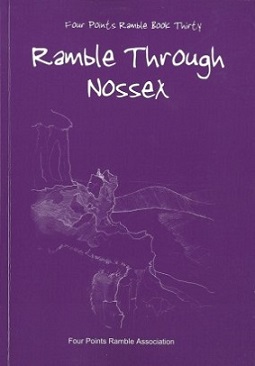
The route covered by this book begins in Bradford-on-Avon,
and follows the Macmillan Way into Somerset, via Beckington, Nunney,
Stourhead, Bruton, Castle Cary, Langport, Aller, Burrowbridge and
Moorland. It then leaves the Macmillan way, following the
Bridgwater & Taunton canal to Taunton before crossing the Quantocks
to Nether Stowey, then recrossing the Quantocks to Bicknoller, Williton,
Watchet, Washford, Dunster, Minehead and Porlock, finishing at Culbone.
Click on the image of the cover to view a sample chapter of the book:
Click on the image of the cover to view a sample chapter of the book:
Book Eight : The Two Moors & Six Rivers Ramble
The route covered by this book begins in Culbone in Somerset, and follows a number of long-distance footpaths, including the Samaritans Way South West, the Exe Valley Way, the Two Moors Way, the Dartmoor Way, the West Devon Way, and several others, southwards over Exmoor into Devon, towards and then onto Dartmoor, before turning westwards as far as Lifton, close to the Cornish border. It passes through Exford, Dulverton, Bampton, Tiverton, Crediton, Chagford, Widecombe and Lydford on the way.
Click on the image of the cover to view a sample chapter of the book:
Book Twenty-two: Ramble Through Northumberland
The
route covered by this book begins on the island of Lindisfarne, and
follows the coast through Berwick to the Northernmost Point in England,
before turning south again and up the rivers Tweed and Till towards
Crookham and Wooler, then via Whittingham, Rothbury, Wallington Hall, Bellingham, Wark and Haltwhisle to finish at
Alston in Cumberland. Trails and paths followed include sections of St
Cuthbert's Way, St Oswald's Way, the River Tyne Trail, the Pennine Way,
the Hadrian's Wall Path, and the South Tyne Trail.
Click on the image of the cover to view a sample chapter of the book:
Book Twenty-three: Cumberland & Westmorland Ramble
Book 23 begins in Alston in the North Pennines and takes a route
through Penrith, past Ullswater to Patterdale, over the ridge to
Thirlmere, then via the Vale of St John to Keswick. From Keswick it
goes over Catbells and High Spy to Honister, then via Moses' Trod and
Aaron Slack to Esk Hause, before descending to Langdale. From there it
climbs Swirl How, then skirts Lake
Coniston, crosses Windermere, passes Staveley and Kendal, and finishes in Arnside by Morecambe Bay, the starting-point of Book 24. Trails and paths
followed include short sections of the Cumbria Way, the Dales Way, and the Limestone Link.
Click on the image of the cover to view a sample chapter of the book:
Book Twenty-four: Ramble Through North Lancashire
Book 24 begins in Arnside by Morecambe Bay, and takes a route through
Carnforth and Lancaster before climbing into the hills of the Forest of
Bowland. It then descends to Chipping and Whalley before
traversing Pendle. From Barrowford, it proceeds north-eastwards
to Gargrave and the starting-point of Book One. Trails and paths
followed include the towpaths of the Lancaster and the Leeds &
Liverpool canals, as well as the Wyre Way, the Pendle Way, and the
Pennine Way.
Click on the image of the cover to view a sample chapter of the book:
The Four Points Ramble Association is very grateful to the Co-operative Bank for a grant of £500 towards the printing costs of this book from their Community Directplus Customer Donation Fund.
Book Thirty: Ramble Through Nossex
Book
30 recounts a turning aside from onward progress in the journey
southwards, and an exploration of the curious and little-known county
of Nossex. The gradual discovery of the peculiar culture of this
most secret of counties, partly through interaction with the
contemporary inhabitants, and partly through hearing thirteen of the Twelve Tales
of Nossex, gives opportunities to reflect on the nature of Christian
community.
Click on the image of the cover to view two sample chapters of the book:
Book Thirty-one: Ramble through West Anglia
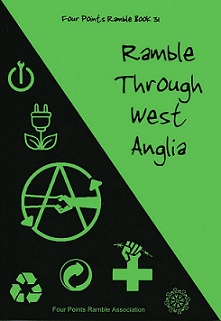
Book 31 tells of another briefer sidetrack from south-westward progress, offering an evaluation of a philanthropic and idealistic project to promote eco-friendly community life, and an update on the experiences of several Nossex characters after five years have elapsed.
Click on the image of the cover to view a sample chapter of the book:
Click on the image of the cover to view two sample chapters of the book:
Book Thirty-one: Ramble through West Anglia
Book 31 tells of another briefer sidetrack from south-westward progress, offering an evaluation of a philanthropic and idealistic project to promote eco-friendly community life, and an update on the experiences of several Nossex characters after five years have elapsed.
Click on the image of the cover to view a sample chapter of the book:
Book Thirty-two: Twelve more Tales of Nemet and Nossex
Book 32 provides 12 more tales, mostly historic, a few contemporary, giving more insight into the origins and characteristics of the hidden and guarded county of Nossex, or Nemet as it was known before the 7th century, or the Nine Hills as it seems to have been known before around 500BC.
Click on the image of the cover to view a sample chapter of the book:
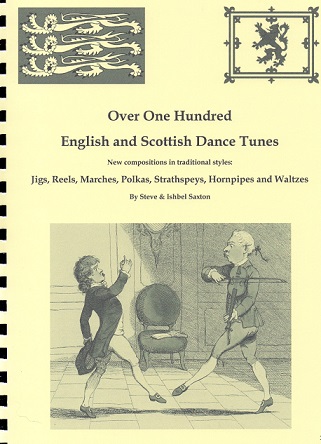
Over One Hundred English and Scottish Dance Tunes
A collection of contemporary compositions in traditional dance music styles, including jigs, reels, marches, polkas, strathspeys, hornpipes and waltzes. Half of the collection is by an Englishman, and includes a number of tunes and some songs that appear piecemeal in the Four Points Ramble books. The other half is by a Scotswoman, including tunes mostly composed to honour individuals and special events.
Footed upon the Sod
An introduction to and celebration of the ancient 3/2 hornpipe, commonplace in the 17th century, wildly popular in the late 17th and early 18th centuries, then gradually forgotten until the late 20th century. This book is a compilation containing some simple and basic tunes, some old and traditional hornpipes with sets of variations, some polished and sophisticated melodies by geniuses such as Purcell and Handel, and a selection of contemporary tunes in traditional style, by modern folk musicians both professional and amateur. Spiral bound for ease of use.
The Division Pennywhistle
A book of 52 variation sets, collected from many sources, Scottish, English, Irish and European, from the 16th to the 21st century, and edited to suit the penny whistle; thereby, however, also playable on any instrument with a two-octave range. Spiral bound for ease of use.